Our History
Our Story
This is not the story of a single, uninterrupted farming operation passed down unchanged through the generations.
It is the story of a family that continued farming in Canada, generation after generation—sometimes together, sometimes apart—carrying forward a shared tradition shaped by land, risk, and resilience.
The Macfie family arrived in Canada in 1824, leaving behind a life in Scotland in search of a better life in Canada. The decision was deliberate—choosing land and permanence over ports and industry, and stepping into a future defined by work, uncertainty, and opportunity.
They settled along the shores of Lake Champlain in Quebec, where they were among the early settlers of Lower Canada. Their presence became so established that a piece of the geography along the lake still carries the family name today. Those early years were demanding, and hardship came quickly. In 1826, after a long day of husking corn late into the evening, a lantern was not properly extinguished. The fire spread, and the barn burned to the ground. With no insurance and no safety nets, rebuilding was the only option.
As opportunity pushed west, a branch of the third generation of the family in Canda moved into Manitoba around 1883, farming near Selkirk on river lots along the Red River. These long, narrow parcels reflected an earlier settlement pattern and required adaptability—working with floods, variable soils, and the realities of prairie river systems. Farming continued, but not always in the same place or under the same structure.
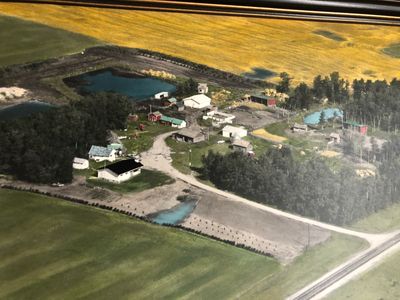
In 1928, one family member of the next generation moved west again, this time into Weldon, Saskatchewan, farming on rented land. That fall, the crop was lost to an early frost—a harsh but familiar reality of prairie farming. Rather than walking away, that same branch moved again in 1929, settling in the Waitville area, purchasing land where permanence finally took root when there were only wagon trails in the area.
During World War II, multiple family members left the farm to serve, and some never returned. The loss shaped everything that followed, both on the land and beyond it.
After the war, those who returned rebuilt again. Through programs available to returning veterans, land was acquired and broken—some of the first in the area to be worked using early mechanized equipment rather than hand and animal power. Brothers established separate farming operations, each working their own land as agriculture modernized. Over time, as they retired and operations wound down, land was gradually sold or rented back within the family, bringing fields back together under one operation.
Mixed farming carried the operation through volatile years, including the farm crisis of the 1980s and the BSE (mad cow) cattle outbreak in the early 2000s. Each challenge reinforced lessons learned long before—adaptability, restraint, and respect for timing.
The next generation did not step directly into farming. They left to work elsewhere, pursue education, and gain experience beyond the farm. When they returned, they did so by choice—not obligation.
After many years operating within a well-established, relatively small 1,000-acre footprint, the farm entered a new phase around 2014, beginning an expansion as land prices began to rise.
By the 2020s, that growth accelerated—built on decades of stability, hard-earned experience, and a family tradition shaped by moving to the next opportunity, managing risk, and timing decisions carefully.
While the operation itself has changed over time, it is relatively uncommon—particularly for farm families in Saskatchewan—to trace a farming tradition in Canada back nearly 200 years. That longterm view continues to shape how decisions are made today.
This story isn’t about an operation that never changed.
It’s about a family that kept farming—adapting to what each generation faced and building forward when the time was right.
And the story continues.